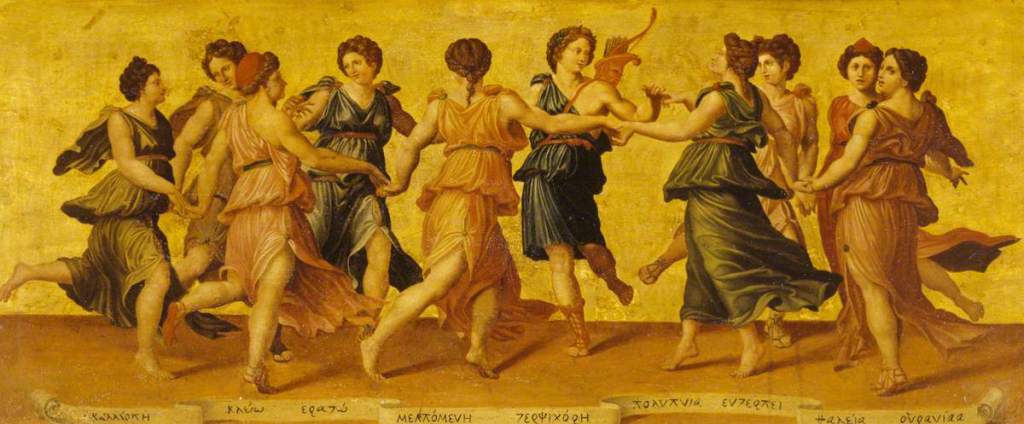
The nine Muses were the daughters of Zeus and Mnemosyne, Titaness of memory. They sang and inspired mortal artists to create their masterpieces. The creativity of every mortal artist and writer depended on the Muses’ indulgence. In addition to having the ability to inspire artists, they personified science and knowledge. The are the incarnation of learning. The nine Muses embodied the traits that gave rise to civilization. Today, we get the term “museum” from these nine goddesses. It literally means “Place of the Muses.”
The Muses were often invoked at the beginning of classical works, either individually or as a whole. You can see this in works such as the Odyssey, Metamorphoses, or Theogony. In the Aeneid, the Muses are called to collectively at the beginning of Book 1, but at the start of Book 7 Erato is invoked by herself. Writers would cite different Muses for different arts.
The Muses featured in relatively few myths, aside from being invoked by the writer at the beginning of many stories. The few stories which did feature them as characters often had them as followers of Apollo. More than one story features a mortal challenging them to a singing contest, losing, and subsequently being punished for their hubris. This was a very common theme in Greek Mythology.
Calliope, Muse of Epics
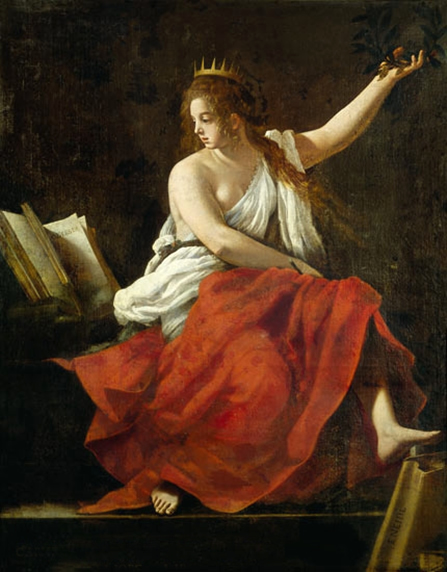
Calliope was the leader of the Muses. She was the wisest of the nine, but also the proudest. She sang of the deeds of legendary heroes. She sang the Iliad and the Odyssey the Homer and the Aeneid to Vergil. With Apollo, she gave birth to Orpheus, the great musician.
Polyhymnia, Muse of Hymns

Polyhymnia was more serious and thoughtful than many of her sisters. She sang religious hymns, to glorify the gods. She also was associated with the arts of meditation and geometry.
Clio, Muse of History
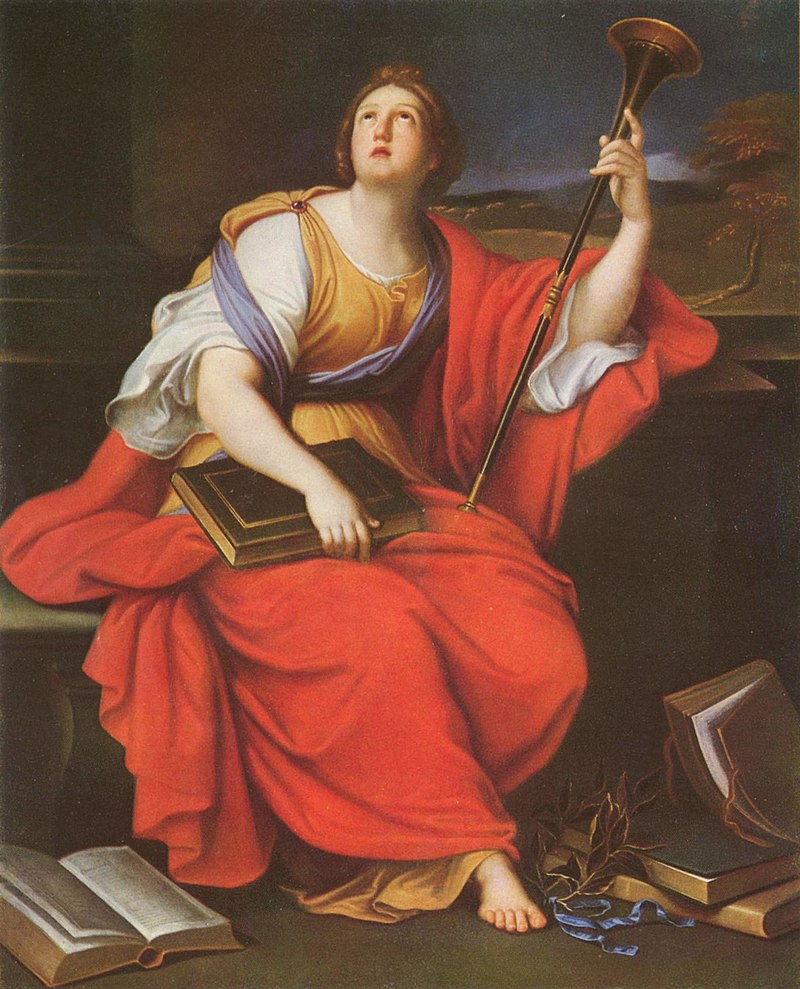
Clio, sometimes called Clio the Proclaimer, performed stories of the past on her lyre. She recounted great exploits of mortals and made them known for the rest of time. She is often pictured with a book or scroll, in order to record the events of history.
Urania, Muse of Astronomy
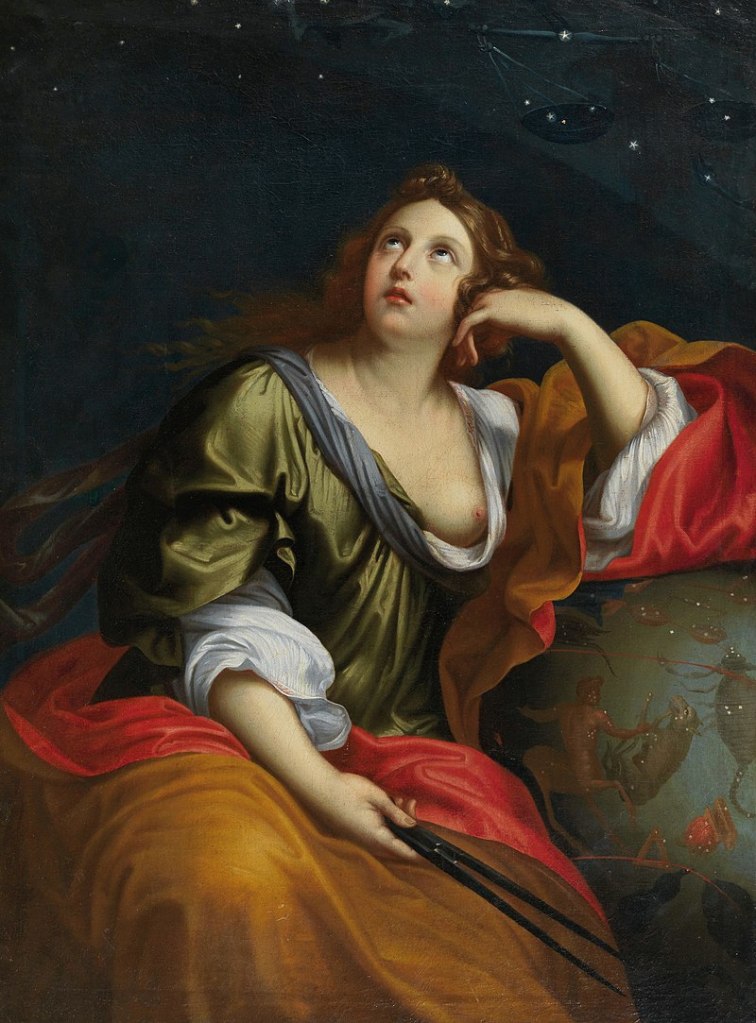
With her lyre, Urania sang of the heavens and inspired the minds of philosophers. She promoted knowledge and the pursuit of wisdom. In later years, she became the muse of Christian poets. John Milton invoked her in his epic poem, Paradise Lost.
Melpomene, Muse of Tragedy
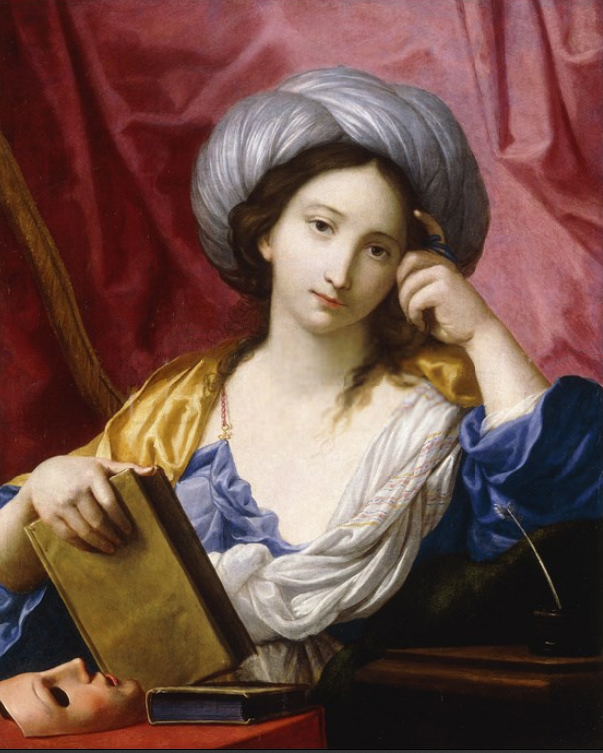
Melpomene often carried a mask of tragedy and a dagger. She was the mother of the river nymphs who were the companions of Persephone. After they failed to prevent her capture by Hades, Demeter transformed them into Sirens.
Euterpe, Muse of Music

Euterpe inspired composers to write their pieces. She favored wind instruments and was often seen with the aulos, a type of double-flute.
Erato, Muse of Love Poetry and Lyrics

Erato inspired poets to write romance stories, and was responsible for lyrics and wordplay. Like many other Muses, she often played the lyre.
Terpsichore, Muse of Dance
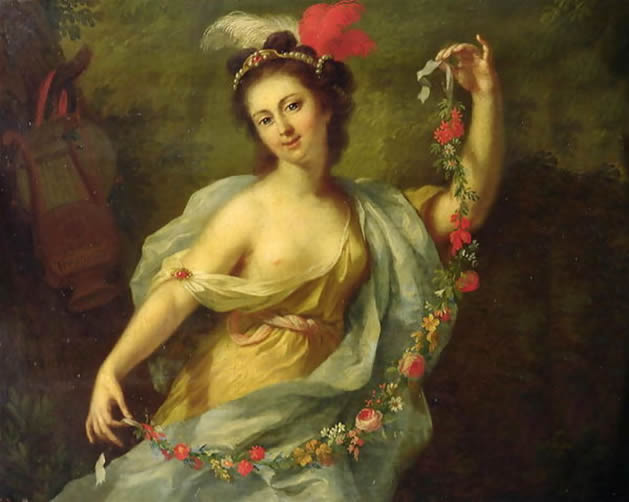
Terpsichore inspired mortals to dance to the music inspired by her sisters. With different fathers, she was the mother of Biston and Rhesus, both kings of Thrace. Her name is still in use today as a fancy term for things related to dance.
Thalia, Muse of Comedy

Joyous Thalia inspired lighthearted works and laughter. She often carried the mask of comedy and a trumpet, which in those days was used to make an actor’s voice loud enough for the audience to hear.
 muscularhistory.com