After overthrowing the Etruscan monarchy in 509 BCE, the Romans needed a way to govern their city, but they did not trust kings anymore. They wanted to limit the power of their leaders in order to prevent the abuses they had suffered from ever happening again. Instead of installing a new king, they set up a republic. Rome would be ruled by the senate, which was led by two consuls. Each consul held veto power over his counterpart, so most actions required the consuls to be in agreement.
Even though the Romans did not trust kings, they kept the idea around in some capacity. During times of crisis, one man would be appointed Dictator. For the duration of the emergency, his word was law. He would give orders and resolve the matter as quickly as possible. The Dictator would have a term of six months, at which point the senate would resume power. One of the most notable cases was Lucius Quinctius Cincinnatus.
In 458 BCE, an Italian tribe called the Aequi launched an invasion of the Roman settlement of Tusculum. Both of Rome’s consuls headed out with their armies to face them, but they were both surrounded and trapped by the Aequi forces at Mount Algidus. To deal with the crisis, the senate appointed Cincinnatus as Dictator.
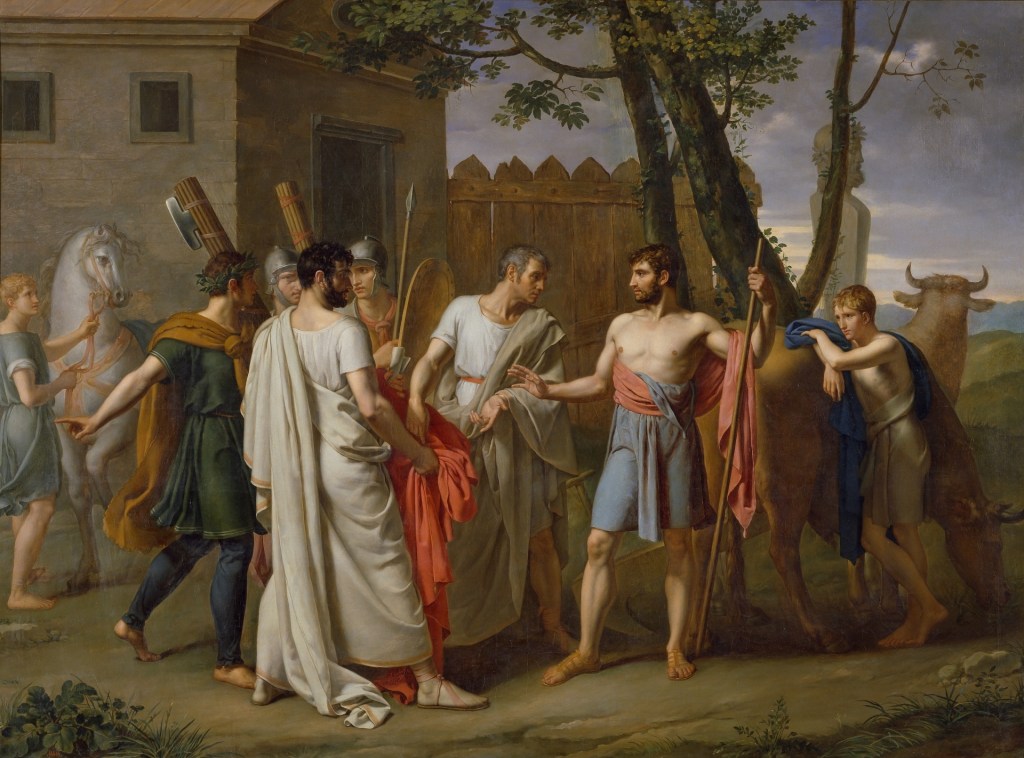
Cincinnatus was a former politician. He had previously served as a consul and was now retired from public life. He now lived on a small farm, and was no longer a young man. He was about 61 years old when the representatives from the senate arrived to tell him of his appointment. When they arrived at his farm, he asked them if something was wrong. They asked him to put on his senatorial toga before they told him anything. He complied, and once the toga was on, they hailed him as dictator and granted him supreme authority over Rome. He immediately left for the city and assembled every man fit for combat on the Campus Martius, or Field of Mars. He organized the women and the men not fit for military service to prepare five days’ worth of rations.
When Cincinnatus’ army was ready, they left for Mount Algidus. When they arrived, they promptly surrounded the Aequi army, which was itself surrounding the trapped Roman army. Cincinnatus had his men quickly erect a wall of wooden spikes to trap the Aequi, and then ordered an attack. With large forces on either side, the Aequi surrendered. Rather than exterminate the army, Cincinnatus accepted their surrender. He executed their leaders, but let the rest go after they passed under a yoke made of three spears as a sign of submission to the Romans. With the battle over, Cincinnatus and the two armies returned to Rome.
Upon arriving home Cincinnatus was received with a magnificent triumphal procession, showing off the spoils looted from the Aequi army. Immediately after the procession concluded, Cincinnatus relinquished authority. He had been in power for only fifteen days. He had an appointment for six months. No one would have stopped him if he stayed in office for this time. Furthermore, many people in Rome wanted him to stay as dictator for the rest of his life. Cincinnatus could have become the king of Rome, but he refused the opportunity. He remembered why the Etruscan kings were expelled from Rome, and believed too strongly in the city’s republican ideals.
According to legend, Cincinnatus returned for another term as dictator in 439 BCE. We don’t have any reliable sources for this event, but the legend still exists. Cincinnatus would have been very old by this time, about eighty. A wealthy figure in Rome named Spurius Maelius was attempting to take control over the city and make himself king. During a famine, he horded a huge supply of wheat and sold it back to the Roman people. He was also believed to be storing a large amount of weapon to use in his planned rise to power. Cincinnatus organized the opposition to prevent Maelius from taking over. Eventually a fight broke out and Maelius was killed. The crisis was resolved, so Cincinnatus again relinquished power and retired to his farm. He died of old age not long after.
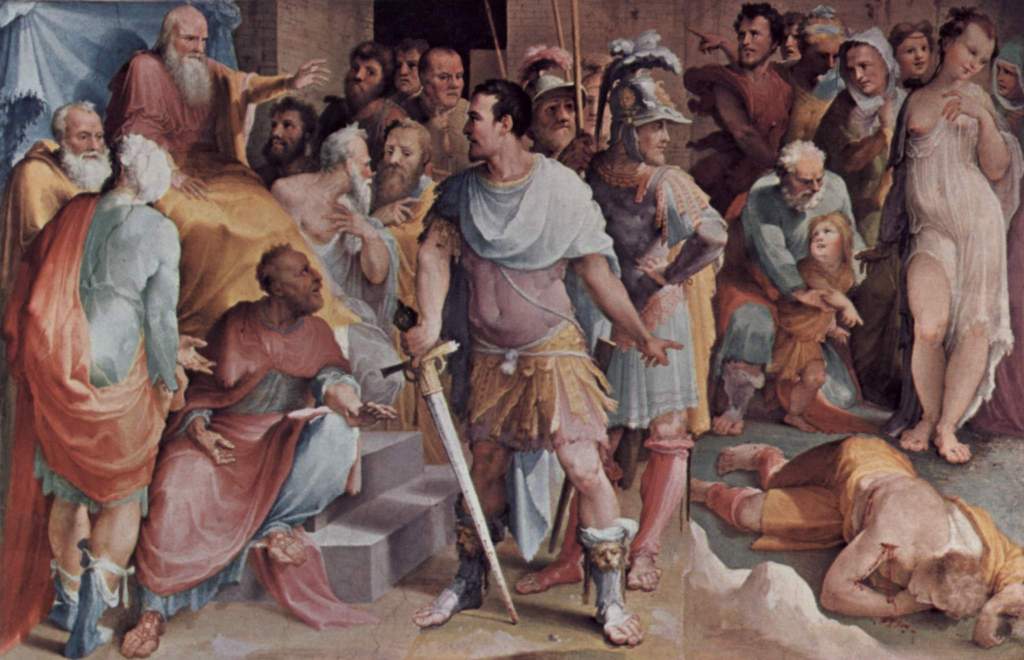
Cincinnatus was a legendary figure in early Roman history. He was well-remembered even in the time of the American Revolution. When the war ended in 1783, George Washington could have easily become the king of the new United States. There were many who called for him to take power. Washington remembered the example of Cincinnatus and refused. Furthermore, he was one of the founders of an organization called the Society of the Cincinnati, which gave its name to the city of Cincinnati, Ohio. Cincinnatus was offered absolute power and turned it down. Very few people throughout history were able to resist this level of temptation. The most famous example, George Washington, directly credited his Roman antecedent. For two-and-a-half thousand years, Cincinnatus has been justly remembered for his leadership and moral fortitude.
 muscularhistory.com