The Persian, or Achaemenid, Empire made two different attempts to conquer Greece. The first attempt began in 492 B.C., when Darius the Great was emperor. This invasion was at first under the command of Mardonius, who succeeded in conquering Thrace and Macedonia to the north of Greece. He could not make further progress due to a storm damaging his fleet, but he had demonstrated the power of the Persian army to the Greeks. Darius sent ambassadors to all the remaining Greek city-states to demand they submit to Persian rule. Only the two strongest cities, Athens and Sparta, refused. Determined to crush these defiant cities, Darius sent two generals, Datis and Artaphernes, to lead a second campaign in 490 B.C. They were joined by Hippias, who was the former tyrant of Athens. He had been deposed twenty years earlier, and was now aiding the Persians in exchange for regaining his rulership of Athens.
This force conquered the Cycladic Islands between Greece and Asia Minor and then attacked Eretria, destroying the city and enslaving its populace. On September 12, the fleet then headed for Marathon, where the army would get off before heading to Athens. The Athenians knew their best chance was to fight them at the landing site. They sent a runner named Pheidippides to run the 150 miles to Sparta in order to enlist their help. Pheidippides ran all the way to Sparta in only two days, but his efforts were in vain. The Spartans were celebrating the Festival of Carnea, in honor of Apollo. During this time, Spartan law forbade military action. They would send their forces immediately after the festival was concluded, but the Greeks could not wait that long. The Persians were coming too soon. The Athenians had to fight this battle on their own, with just a small force of Plateans to aid them. Pheidippides immediately turned around and ran another 150 miles back to Athens to bring them the news.
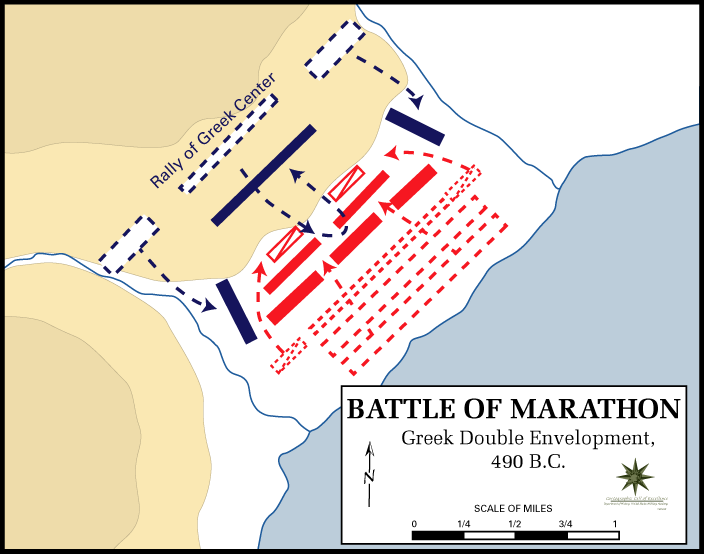
The Persian army exited their ships with a force consisting of 25,000 regular infantry, 1,000 cavalry, and 100,000 sailors to defend the fleet, which numbered at 600 triremes and 200 support vessels. They were met by a much smaller army of approximately 10,000 Athenians, and 1,000 allied Plateans. The armies stood on a stretch of beach slightly less than a mile across. The Athenians stretched their formation out so they would not be outflanked by the much larger Persian army. When the Persian troops were on the beach, the Athenian hoplites charged over 650 feet to meet them in battle, an astonishingly difficult feat in 70 pounds of full armor and equipment, not to mention the summer heat. This is thought to have been done because most of the Persian infantry were armed with missile weapons.
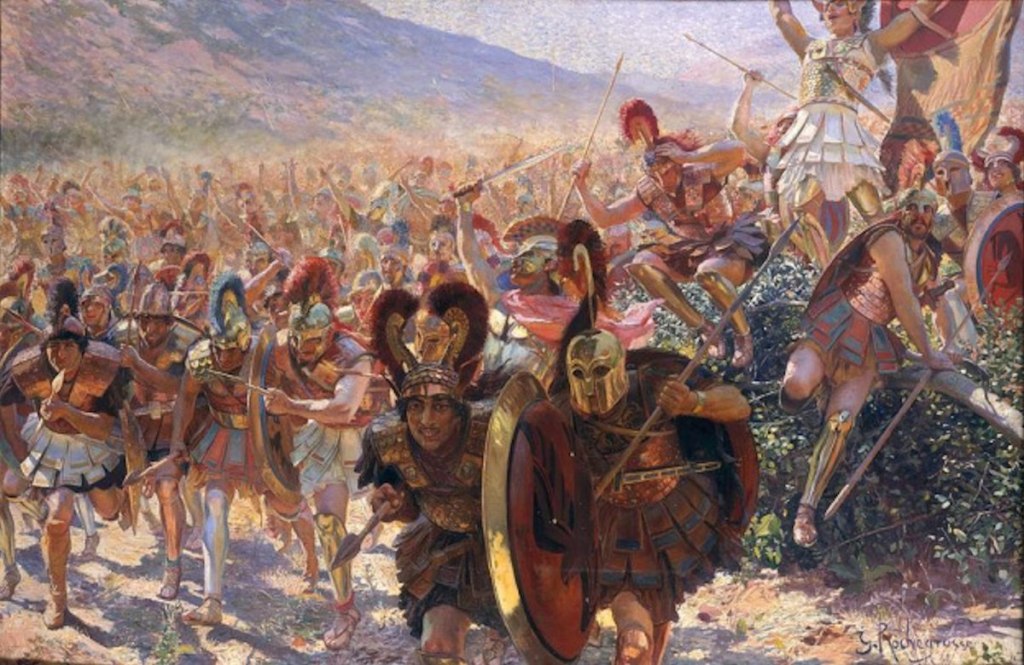
Faced with the much more heavily armed Greeks, the light infantry at the sides quickly routed and the Greek flanks moved to envelope the Persian army. Outflanked, and easily outfought on a soldier-to-soldier basis, the Persian army quickly crumpled in a crushing victory for Athens. Approximately 5,000 Persians lay dead, while modern estimates place between 1,000-to 3,000 Athenians killed in the battle. Herodotus, in Book VI of his Histories, claimed that only 192 Athenians and 11 Plateans died. The Spartans arrived shortly after the battle ended. They toured the site and praised the Athenians for their great victory.
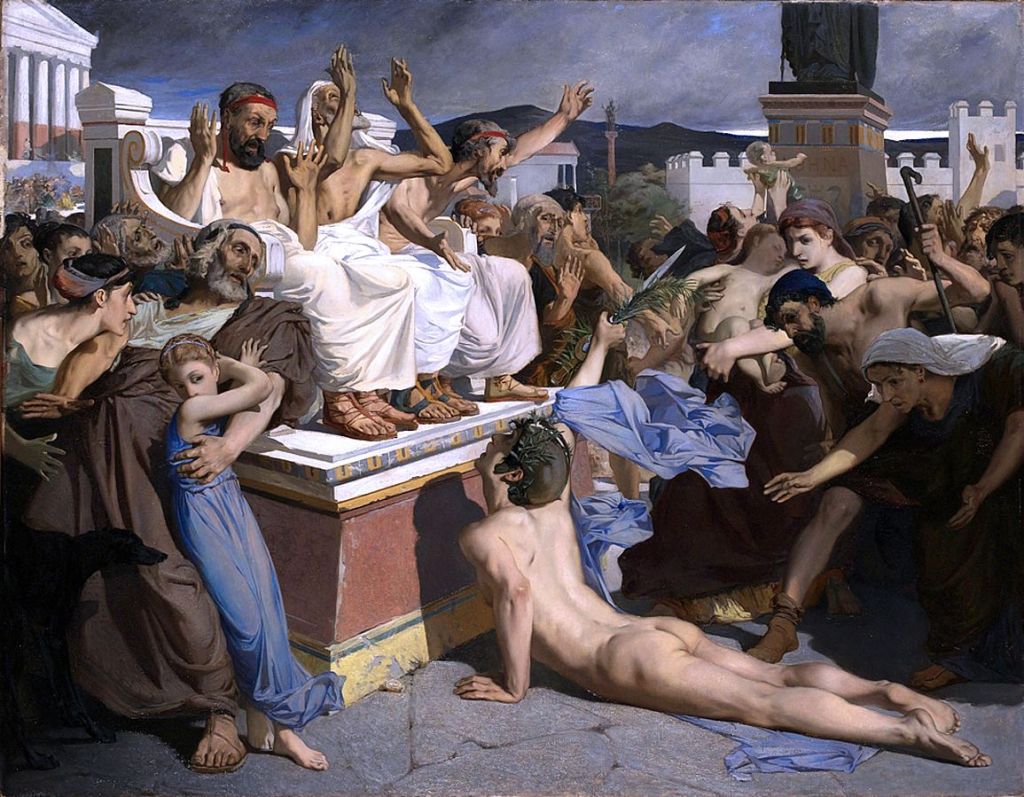
After the battle, Pheidippides ran back to Athens, a distance of about 26 miles. He had just run over 300 miles. He soon arrived in Athens, barely able to stand. He could only gasp one word, “victory!” before he collapsed and died from exhaustion. Today, the marathon race is named in memory of the last leg of Pheidippides’ astonishing feat.
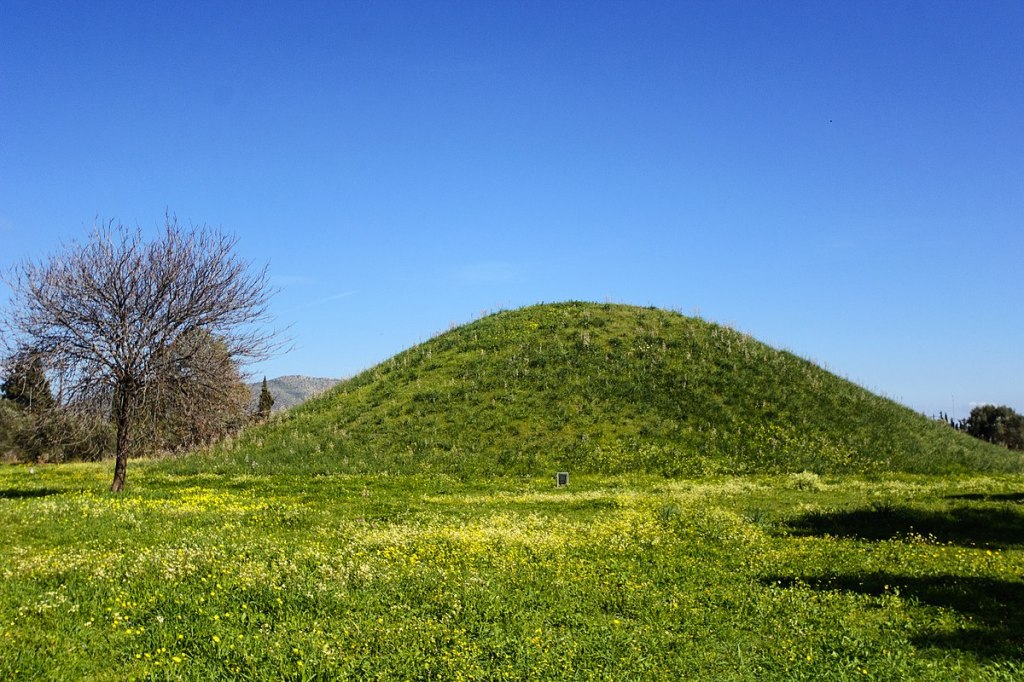
The dead were cremated and buried in a massive mound on the battlefield, which you can still see today. A column was placed at Marathon to commemorate the victory, and 400 goats were sacrificed to Artemis. At Athens, a statue of Nike was erected on the Acropolis. Hoplites who fought at the battle would afterward bare an image of the Bull of Marathon on their shields, demonstrating how they had participated in the great battle.
The Battle of Marathon was a stunning victory for the Greeks. The Athenian army demonstrated to the other cities that Persia could be beaten. Immediately after the battle, the remaining Persian forces turned and sailed to attack Athens directly. The Athenian army at Marathon realized they would do this, and raced back to Athens as quickly as possible. They managed to get there in time to occupy the cost and deny the Persians a secure landing zone. Upon seeing this, the Persians turned around and headed back to their empire. Greece was saved, for the time being.
Darius planned to gain his revenge on Greece with another invasion, but his subjects in Egypt launched a revolt in 486 BCE, before he could attack. He had to put the second invasion of Greece on hold until he dealt with this other problem. He never would attack Greece again himself, though. Darius died while traveling to Egypt, and his son Xerxes I became emperor in 486BCE. Xerxes had great success against Egypt, and the revolt was ended in short order. Xerxes then turned his attention to Greece, wanting to avenge his father’s defeat. We will look at these events next time.
Links:
Herodotus, The Histories, Book VI
The Battle of Marathon, from The World History Encyclopedia
 muscularhistory.com

