In the aftermath of his victory at the Trebia River, Hannibal attracted many new allies. His army swelled to about 50,000 men. Rome quickly replaced its Consuls and sent an army of 30,000 to chase the Carthaginians down.
On June 21st, 217 BCE, Hannibal fought another battle against the Romans, at Lake Trasimene. Hannibal chose a spot of road as the location of his battle. On one side, there was the lake. On the other side, there was a forest up a hill. This spot was perfect for springing an ambush with little chance of escape.
Hannibal hid the bulk of his forces up the hill behind the tree cover, leaving a small contingent of elite soldiers to block the road and the end. Here they lay in wait. When the Romans came, a heavy fog had descended upon the lakeside. The Roman army was marching in a narrow column, but had neglected to send any scouts ahead of the main force. This led to the front of the Roman army making surprise contact with the Carthaginians Hannibal had placed on the road. Fighting commenced, but the Romans down the line could not see what was going on. All they knew was that the army had stopped. At this moment, Hannibal and the bulk of his army crept up close to the Romans, before charging to attack. From the Roman’s perspective, the enemy army had appeared out of nowhere. Hannibal had sent his cavalry to block the road off from the other end of the Roman army. There was no escape for the Romans now. It was the Carthaginian army or the water.

The Roman army quickly fell apart in a panic. Many were cut down by the Carthaginians. Others made for the water, but were weighed down by their armor and drowned. The Romans at the from of the army managed to cut through the enemy lines. They ran, but were soon chased down by Hannibal’s cavalry. All in all, 15,000 Romans died and another 15,000 were captured. No one is known to have escaped.
Having now suffered two disastrous defeats back-to-back, the Romans were terrified. The Senate appointed Quintus Fabius Maximus Verrucosus as Dictator, known to historians as Fabius. He was a respected and experienced leader, but the position of Master of the Horse went to his political enemy, Marcus Minucius Rufus, known to historians as Minucius. The two leaders had vastly different ideas of how to deal with the Carthaginian crisis.
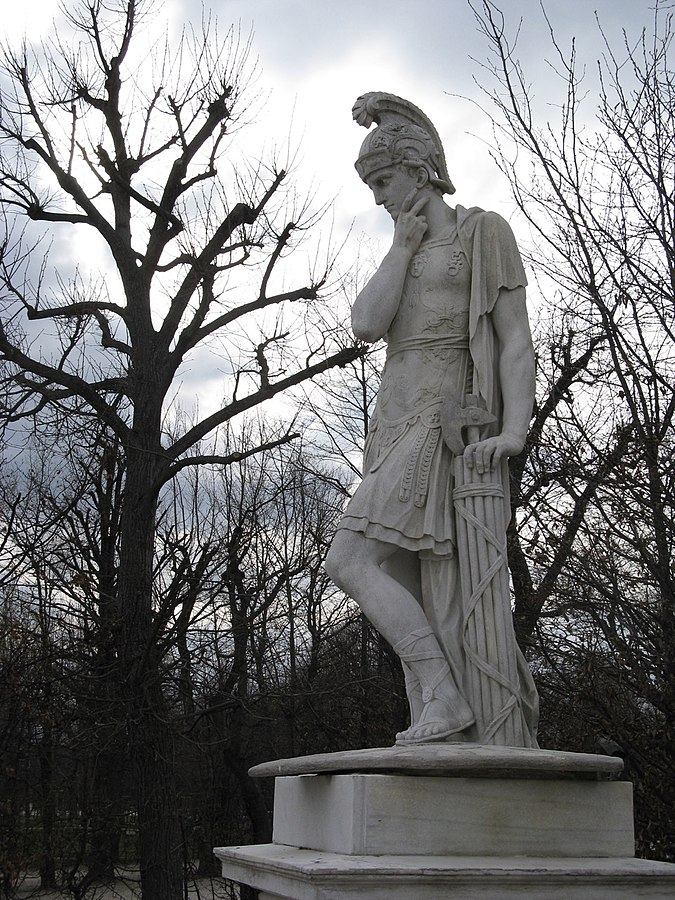
Fabius wanted to avoid conflict with Hannibal whenever possible. He knew that Hannibal and his army were virtually unbeatable in the field, but they had one weakness the Romans could exploit: logistics. They were far away from their homeland, and would have a very difficult time getting reinforcements and new supplies. He had no siege equipment, so he could not take a properly fortified city. Hannibal had to rely on foraging and making alliances with other peoples of the Italian peninsula. Fabius argued that he could not keep this up forever. By avoiding Hannibal, and denying him the chance for victory in the field, Rome could simply outlast this threat. Small raiding parties would harass Hannibal’s men, inhibiting their ability to wage war and gradually wearing them down through attrition. Hannibal’s army would soon grow weak, and the Romans could deal with it accordingly when the opportunity came.
While some saw the practical wisdom in Fabius’ approach, it did not sound very appealing to many Romans. They wanted revenge. Minucius appealed to this desire and publicly attacked Fabius, calling him a coward for his refusal to meet Hannibal in combat.
Fabius and Minucius each controlled half of Rome’s armies, and used them to execute their own strategies. In the autumn of 217 BCE, Minucius led his army into battle against Hannibal at Geronium, disobeying Fabius’ orders to avoid engagement. Fabius had his own army only three kilometers away, and could observe the proceedings. Hannibal was camped at the top of a hill, and Minucius sent his army to attack. They began to clash, but Hannibal then revealed reinforcements hidden just over the ridge. They began to surround Minucius’ army, but Fabius could see the looming ambush. He led his army to join the battle, the combined Roman forces greatly outnumbered the Carthaginian army. Hannibal’s ambush failed, and he signaled for his army to make a hasty retreat. Neither army took heavy losses, but the Romans were happy to see the modest success of this battle. They did not defeat Hannibal, but they did prevent him from gaining another spectacular victory. Minucius, for his part, recognized his mistake. He and Fabius reconciled, with Fabius recognizing that Minucius fought and led his men bravely in the battle.
After this battle, Fabius’ strategy continued for the time being. Large-scale engagements with Hannibal’s army were avoided in favor of minor skirmishes. At the same time, the Romans pushed back against Carthaginian holdings in the Iberian Peninsula. Led by the brothers Gnaeus and Publius Scipio, they made military gains against Carthage while making diplomatic overtures to the native tribes. Despite their difficulties at home, they were still having some successes in the war.
When Fabius’ six-month term as Dictator expired, the Senate chose not to renew his appointment. Perhaps bolstered by their successes in Iberia, the new Consuls, Lucius Aemilius Paullus and Gaius Terentius Varro, raised an absolutely enormous army to meet Hannibal in the field and finally end the threat he posed to Rome. What followed was one of the darkest moments in Roman history.
Links
The Second Punic War, at the World History Encyclopedia
 muscularhistory.com