In the fourth century BCE, Rome was a rising power in Italy, but it was a long way from becoming the unstoppable superpower it would be at its height. The city of Rome itself was still vulnerable to barbarians. The familiar Roman legions had not yet taken form. At this time, the Roman army fought in a hoplite formation, like most other Mediterranean city-states. Rome was not to be dismissed in battle, but it was still beatable. Rome was nearly destroyed when it was sacked in a conflict with the Gauls which is traditionally dated to 390 BCE, but most likely happened in 387 BCE.
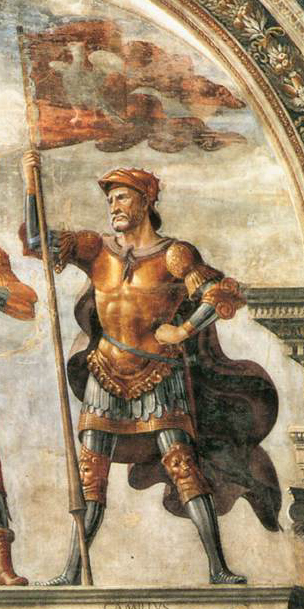
The principal character in this story is Marcus Furius Camillus, who was a Roman general who had great success against the nearby cities as Rome began its expansion. Despite his great military victories, he made unpopular decisions which led to him getting accused of withholding the spoils of war from his men. He forced his soldiers to sacrifice some of their loot to the gods, and decided to spare the city of Falerii, which meant no-one would be getting any plunder. These policies made him widely disliked by the Romans. Camillus was eventually exiled from the city of Rome and spent his time in a nearby city called Ardea.
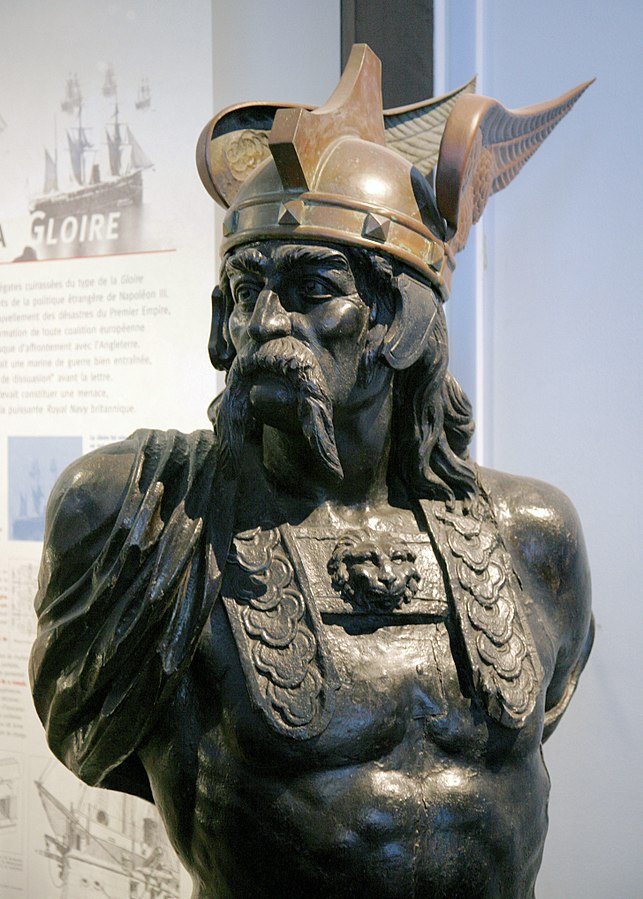
A Gallic tribe known as the Senones had conquered much of northern Italy. They besieged the city of Clusium, which called to Rome for help. The Romans sent a few emissaries to the besieged city, and they attempted to negotiate with the Senone leader, Brennus. The Gallic king laughed at their requests, pointing out the hypocrisy of the Romans objecting to the Gallic conquests when they were expanding their own territory. The Roman emissaries went inside Clusium, where they incited the people to sally forth and fight off the Gauls in the field. The sides fought, and during the battle Brennus saw the Roman ambassadors fighting alongside the Clusians. Enraged at this, he broke the siege and made his army march to Rome. When word reached Rome, they quickly scrambled to organize the defense of the city.
The Romans placed their army by the Allia River, a small tributary of the Tiber. Here they stood against the Senones, but Rome did not have a professional army at this time. Most soldiers had never seen combat before. The more experienced Gauls quickly pushed them back, scattering the Roman army. Many fled, and three days later the Senones entered Rome.
The Capitoline Hill remained fortified, and the Gauls were still unable to breech its defenses. Still, they looted and burned the rest of the city while they besieged the Capitoline. While this was going on, the Gauls sent foraging parties to get food from the countryside, as they couldn’t feed their whole army for very long with what was left in Rome. One of these foraging parties passed by Ardea. Seeing this, Camillus organized the Ardeans into a small army. Under the cover of night, Camillus and the Ardeans snuck outside of the city and surrounded the Senones in their encampment. The blasted loud horns, confusing and disorienting the Senones, and then charged at them from all sides. Very few of the barbarians survived.
News of Camillus’ victory reached the city of Veii, where many of the survivors of the Battle of the Allia were staying. They immediately asked Camillus to take command and lead the fight against the occupying Gauls, but Camillus refused. He could only be given that authority by the Senate. Hearing about Camillus’ reservations, one Roman soldier managed to sneak into the city and bring word of this to the Senate. The remaining leaders of Rome immediately appointed Camillus dictator, and the messenger left as quickly as he had come. Word of the Senate’s decision soon reached Camillus. He immediately left with an army of Ardeans and people from other allied cities to meet with the Roman survivors at Veii.
The siege had been going on for about seven months, and both sides were reaching their breaking point. The Romans tried to negotiate a peace with the Gauls. They eventually reached an agreement to pay one thousand pounds of gold in exchange for Brennus and his men withdrawing from the city. When the Romans brought the gold out to be weighed, they noticed that the Senones were using heavier weights than was normal. The Romans protested, and in response Brennus tossed his sword onto the scales and said the famous words, “Vae Victis!” or “Woe to the Vanquished!”

While this was going on, Camillus and his army entered the city. He immediately ordered that the gold be taken back, saying that Rome’s tradition was to protect the city not with gold, but with iron. A fight broke out, but little could be done within the confines of the city. Brennus withdrew his troops from the streets to the better terrain outside the city, and Camillus followed with his army.

The next day, the armies fought in the field, at Gabbi. Under Camillus’ leadership, the Romans were victorious, and Brennus was killed in the battle. For his efforts, Camillus was honored as “Pater Patriae” or “Father of the Fatherland.” Recognized as the second founder of Rome, he continued his illustrious career leading Rome’s armies and leading it in the political arena as well. The city’s prestige would increase even further, and it would eventually become the greatest power in the Mediterranean. If it were not for Camillus, Rome likely would not have ever become such an influential superpower. Because of his efforts, it would be another eight hundred years before Rome was sacked again.
Links
Livy, From the Founding of the City, Book 5
Camillus, at the World History Encyclopedia
Brennus, at the World History Encyclopedia
 muscularhistory.com